

Introduction
Addiction is a complex condition that affects millions of people worldwide. Whether it involves substances like alcohol and drugs or behaviors such as gambling, social media use, or overeating, addiction can lead to unhealthy habits that damage physical health, mental well-being, and relationships. These habits often become deeply ingrained over time, making them difficult to break without proper awareness, support, and treatment.
Recovery from addiction is not just about quitting the substance or behavior—it also involves identifying and eliminating the unhealthy habits that developed during the addiction. Many individuals in recovery struggle with replacing destructive routines with positive ones. Learning how to break these habits and adopt healthier behaviors is essential for long-term recovery and personal growth.
In this guide, we will explore what addiction is, the different types of addiction, how unhealthy habits develop during recovery, and practical strategies for getting rid of harmful habits. We will also highlight reputable addiction treatment centers in India and the United States that offer professional support for recovery.
What Is Addiction?
Addiction is a chronic condition characterized by the compulsive use of substances or engagement in behaviors despite harmful consequences. It affects the brain’s reward system, making individuals crave certain substances or activities even when they know the negative impact.
Addiction can impact:
- Physical health
- Mental health
- Relationships
- Financial stability
- Work and personal life
According to the National Institute on Drug Abuse, addiction alters brain chemistry, affecting decision-making, impulse control, and behavior patterns.
Key Characteristics of Addiction
| Characteristic | Description |
| Cravings | Strong urge to use a substance or repeat a behavior |
| Loss of Control | Difficulty stopping even when trying |
| Tolerance | Need for increased amounts to achieve the same effect |
| Withdrawal Symptoms | Physical or emotional symptoms when stopping |
| Continued Use Despite Harm | Ongoing behavior despite negative consequences |
Addiction is not simply a lack of willpower; it is a medical condition that often requires professional treatment and behavioral change.
What Are the Types of Addiction?
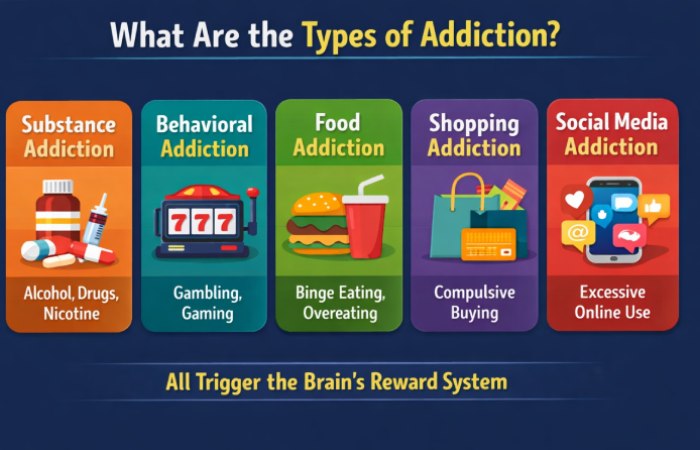 Addictions are generally divided into two major categories: substance addictions and behavioral addictions.
Major Types of Addiction
| Type of Addiction | Examples | Common Effects |
| Substance Addiction | Alcohol, nicotine, opioids, cocaine | Physical dependency and withdrawal symptoms |
| Behavioral Addiction | Gambling, internet use, gaming | Compulsive behavior and emotional dependency |
| Food Addiction | Overeating or binge eating | Weight gain and health issues |
| Shopping Addiction | Compulsive buying | Financial stress and guilt |
| Social Media Addiction | Excessive online engagement | Anxiety, distraction, reduced productivity |
Behavioral addictions may not involve chemicals, but they activate the same brain reward systems as drugs and alcohol.
Unhealthy Habits in Recovery
When someone begins addiction recovery, they often discover that many unhealthy habits remain even after stopping the addictive substance or behavior. These habits may have developed as coping mechanisms during addiction.
Common unhealthy habits during recovery include:
| Habit | Impact |
| Isolation from friends or family | Emotional distress |
| Poor sleep patterns | Increased stress and fatigue |
| Unhealthy eating | Reduced physical health |
| Negative thinking | Increased relapse risk |
| Avoiding responsibilities | Loss of motivation |
Recognizing these habits is the first step toward replacing them with healthier alternatives.
Bad Habit vs. Addiction
Many people confuse bad habits with addiction, but they are not the same. While both involve repeated behaviors, addiction has stronger psychological and physical components.
Comparison Table
| Factor | Bad Habit | Addiction |
| Control | Can usually stop with effort | Very difficult to stop |
| Dependency | Low or none | High psychological or physical dependency |
| Withdrawal | Rare | Common |
| Impact | Minor lifestyle effects | Severe personal and health consequences |
| Treatment | Often self-managed | Often requires professional help |
A bad habit may be annoying or unhealthy, but addiction involves a deeper level of dependency that affects brain function and behavior.
What Causes Unhealthy Habits in Addiction Recovery?
Even after quitting substances, unhealthy habits can persist due to psychological triggers and lifestyle patterns.
Common Causes
| Cause | Explanation |
| Stress | Individuals may revert to old coping behaviors |
| Environmental Triggers | Being around people or places linked to addiction |
| Emotional Trauma | Past experiences may influence behavior |
| Lack of Structure | Idle time increases risk of unhealthy habits |
| Mental Health Issues | Anxiety or depression can trigger negative habits |
Many addiction experts emphasize the importance of structured routines and therapy during recovery to address these underlying causes.
How to Get Rid of an Unhealthy Addiction
Breaking unhealthy habits in addiction recovery requires commitment, self-awareness, and often professional guidance.
Effective Strategies
| Strategy | Description |
| Identify Triggers | Understand situations that cause cravings |
| Set Clear Goals | Create realistic recovery milestones |
| Build Healthy Routines | Structure daily activities with positive habits |
| Seek Professional Therapy | Counseling can help address root causes |
| Join Support Groups | Peer support helps maintain accountability |
| Practice Mindfulness | Meditation reduces stress and impulsive behavior |
Healthy Replacement Habits
| Negative Habit | Healthy Replacement |
| Drinking alcohol | Exercise or sports |
| Late-night screen time | Reading or journaling |
| Isolation | Social support meetings |
| Junk food | Balanced nutrition |
Replacing negative behaviors with positive ones helps rewire the brain and build healthier lifestyle patterns.
Dangers of Bad Habits in Addiction Recovery
Unhealthy habits during recovery can significantly increase the risk of relapse.
Potential Risks
| Risk | Description |
| Relapse | Returning to substance use |
| Mental health decline | Increased anxiety or depression |
| Relationship problems | Conflicts with family or friends |
| Loss of motivation | Difficulty maintaining recovery goals |
| Physical health issues | Poor diet and sleep affecting health |
Addressing these habits early is crucial for maintaining long-term sobriety and emotional stability.
Preventing Bad Habits from Derailing Your Addiction Recovery
Preventing unhealthy habits from returning requires a proactive approach.
Prevention Strategies
| Strategy | Benefit |
| Structured daily routine | Reduces idle time |
| Regular therapy sessions | Provides emotional support |
| Exercise and physical activity | Improves mood and health |
| Healthy social connections | Encourages positive influences |
| Stress management techniques | Prevents emotional triggers |
Building a supportive environment plays a major role in preventing relapse and maintaining healthy behaviors.
Seek Treatment for Co-Occurring Disorders
Many people struggling with addiction also experience mental health conditions such as depression, anxiety, or PTSD. These are known as co-occurring disorders.
Common Co-Occurring Disorders
| Disorder | Symptoms |
| Depression | Persistent sadness and low motivation |
| Anxiety | Excessive worry or panic attacks |
| PTSD | Trauma-related stress and flashbacks |
| Bipolar Disorder | Mood swings and impulsive behavior |
Treating both addiction and mental health conditions simultaneously greatly improves recovery outcomes.
Replace Bad Habits with Good Habits
Positive habits help rebuild confidence and stability during recovery.
Examples of Good Habits
| Healthy Habit | Benefit |
| Regular exercise | Improves mood and energy |
| Meditation | Reduces stress and cravings |
| Healthy diet | Supports physical recovery |
| Journaling | Encourages self-reflection |
| Skill development | Builds confidence and purpose |
Over time, these positive habits become part of a healthier lifestyle.
Addiction Centers in India and the USA
Professional treatment centers provide medical care, therapy, and structured recovery programs.
Addiction Treatment Centers in India
| Center | Location | Services |
| National Drug Dependence Treatment Centre | New Delhi | Detoxification and counseling |
| Cadabams Rehabilitation Center | Bangalore | Mental health and addiction treatment |
| Sanctum Wellness and Healing | Delhi NCR | Luxury rehab and therapy programs |
| Tulasi Healthcare | Gurugram | Psychiatric and addiction treatment |
Addiction Treatment Centers in the USA
| Center | Location | Services |
| Hazelden Betty Ford Foundation | Minnesota | Comprehensive addiction recovery programs |
| Caron Treatment Centers | Pennsylvania | Medical detox and therapy |
| The Recovery Village | Florida | Substance abuse and mental health treatment |
| Sierra Tucson | Arizona | Integrated behavioral health care |
These centers offer evidence-based treatment programs, including detoxification, therapy, and relapse prevention strategies.
Conclusion
Addiction recovery is a challenging journey that requires more than simply quitting a substance or behavior. Unhealthy habits often remain deeply rooted and can threaten long-term recovery if not addressed properly.
Understanding the difference between bad habits and addiction, identifying triggers, and replacing negative behaviors with positive routines are essential steps toward lasting change. Support systems, professional treatment, and healthy lifestyle choices play a crucial role in helping individuals break free from destructive patterns.
With dedication, self-awareness, and the right resources, it is possible to overcome unhealthy habits and build a healthier, more fulfilling life in recovery. Many reputable addiction treatment centers in India and the United States provide specialized care, offering hope and support for individuals seeking a path toward lasting sobriety and well-being.